
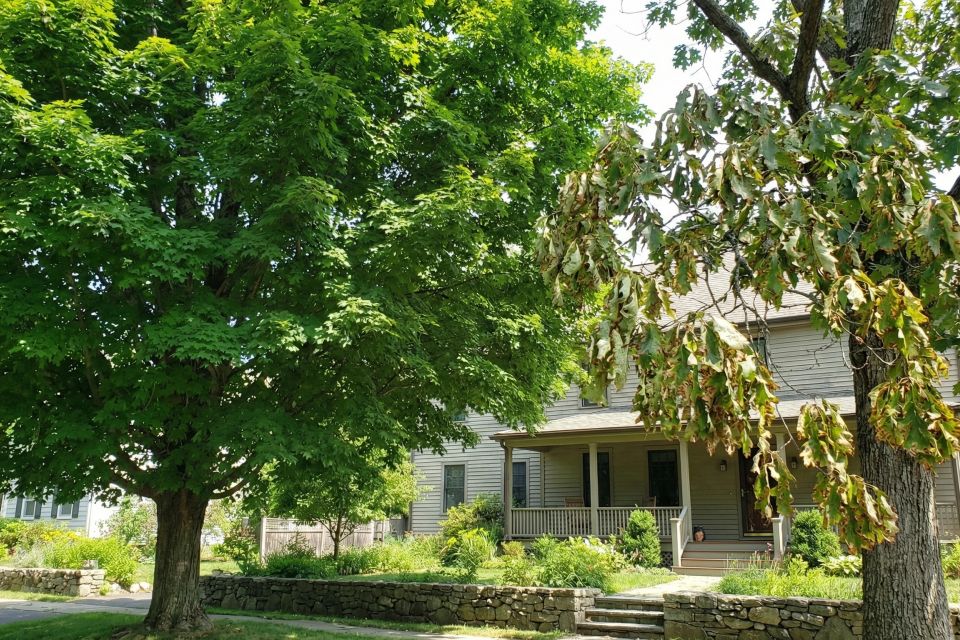
Healthy trees do more than look great — they help keep your property safe and add value to your home. But when trees start to get sick, they can quickly become unsafe and even reduce property value. With Connecticut’s humid summers and wet springs, local trees are especially vulnerable to fungal and bacterial diseases.
At Middletown Tree Experts, we believe that knowing the basics about common tree diseases helps homeowners catch problems early, keep trees in better shape, and avoid costly removals. Below, we break down the most frequent diseases in Connecticut, the symptoms to watch for, and when to call in a professional for a tree inspection.
If you notice sudden leaf drop or browning in your oaks, contact Middletown Tree Experts today for a free inspection. Early detection can save your trees. Call (860) 788-4434
Our licensed team at Middletown Tree Experts provides full tree health evaluations, diagnoses, and tailored solutions — from pruning and soil treatments to safe removals when necessary.
Call now or request your free estimate online — let us help you keep your trees healthy and your home safe.
At Middletown Tree Experts, we believe that knowing the basics about common tree diseases helps homeowners catch problems early, keep trees in better shape, and avoid costly removals. Below, we break down the most frequent diseases in Connecticut, the symptoms to watch for, and when to call in a professional for a tree inspection.
Dutch Elm Disease
Dutch Elm Disease has devastated Connecticut’s elm trees for decades. Caused by a fungus spread by elm bark beetles, it can kill mature trees in a single season.-
Symptoms:
- Wilting and yellowing leaves, often starting in one section of the crown
- Brown streaks beneath the bark
- Crown dieback (thinning at the top)
- Risk: This disease spreads quickly and requires immediate action. Infected trees may need removal to protect nearby healthy elms.
Oak Wilt
Oak Wilt is a serious fungal disease affecting red, black, and pin oaks. It blocks water movement inside the tree, leading to rapid decline.-
Symptoms:
- Browning leaf tips and edges
- Sudden, heavy leaf drop before fall
- Leaves clinging to branches even after turning brown
- Risk: Mature oaks can collapse within weeks. Because it spreads underground through roots and aboveground via beetles, professional intervention is essential.
If you notice sudden leaf drop or browning in your oaks, contact Middletown Tree Experts today for a free inspection. Early detection can save your trees. Call (860) 788-4434
Anthracnose (Maple, Sycamore, Dogwood)
Anthracnose thrives during Connecticut’s damp springs, especially in maples, sycamores, and dogwoods.-
Symptoms:
- Irregular brown or black blotches along leaf veins
- Curling and early leaf drop
- Twig dieback
- Risk: While rarely fatal, repeated infections weaken trees, making them more vulnerable to pests. Professional pruning and cleanup can help reduce the risk of recurrence.
Beech Leaf Disease
A newer threat in Connecticut, Beech Leaf Disease, is caused by microscopic nematodes in leaf tissue.-
Symptoms:
- Dark banding between leaf veins
- Crinkled or puckered leaf surfaces
- Thinning crowns by late summer
- Risk: Over time, beech trees weaken, leaving them susceptible to insects and winter damage. There is no cure yet, so reducing stress and catching symptoms early is critical.
Apple Scab & Cedar‑Apple Rust
Fruit trees in Connecticut often face these fungal diseases.- Apple Scab Symptoms: Olive‑green or gray spots on leaves and fruit, distorted growth, early leaf drop.
- Cedar‑Apple Rust Symptoms: Bright orange galls on cedars in spring, yellow‑orange leaf spots on apples.
- Risk: Both diseases reduce fruit quality and weaken trees. Timely cleanup and treatments can help, but persistent issues require professional care.
Other Notable Tree Diseases
- Chestnut Blight: Rare today, but causes orange cankers on bark.
- Verticillium Wilt: Soil‑borne fungus causing wilting and branch dieback in maples, ash, and redbuds.
-
Bacterial Leaf Scorch: Brown leaf margins with yellow halos, often in oaks and maples.
When to Call a Tree Expert
Spotting disease symptoms early gives you more options than waiting for an emergency. If you notice sudden leaf changes, dead branches, oozing sap, or thinning crowns, it’s time to call in professionals.Our licensed team at Middletown Tree Experts provides full tree health evaluations, diagnoses, and tailored solutions — from pruning and soil treatments to safe removals when necessary.
Preventing Tree Loss
Early detection and proactive care are the best defenses against tree disease. Regular property walks, smart pruning, and seasonal cleanup go a long way toward keeping trees healthy. When in doubt, a quick inspection from trained experts can mean the difference between saving a tree and losing it.Conclusion
Don’t wait until disease spreads through your yard. Contact Middletown Tree Experts today for a free tree health evaluation in Middletown, CT. Our licensed professionals will give you honest answers, safe solutions, and peace of mind knowing your property is protected.Call now or request your free estimate online — let us help you keep your trees healthy and your home safe.